

The junior college coordinator of a Hadapsar-based private institute said that in a surprise check of bags, on an average, at least one out of seven students would be found with a vaping device.
Introduction
Even after a nationwide ban on e-cigarettes in India, vaping has silently entered college classrooms in Pune. What was once marketed as a safer alternative to smoking has now turned into a growing concern for parents, teachers, and authorities. Easy availability, weak enforcement, and lack of awareness have made vaping common among college students.
vaping in Pune colleges, e-cigarette ban in India, vaping among students, college vaping issue, youth vaping India
It was just another day at the mechanics class at one of the private universities in Pune when 19-year-old Aryan sitting on the front bench casually took a puff from his vape, also known as an e-cigarette, as the teacher was turned towards the blackboard. He gulped most of the smoke and all that remained was a fruity scent, not enough to raise suspicions in the teacher. While the students sitting behind saw what happened, nobody raised any objection. Another friend, in fact, asked for a puff herself.
While the shift from cigarettes to vapes has been a major trend among the youths, the usage of e-cigarettes amidst a glaring lack of checks, laws and lack of awareness, has become notoriously high even inside educational institutes.
Vaping Devices Found During Surprise College Checks
According to a junior college coordinator from a Hadapsar-based private institute, surprise bag checks revealed a disturbing pattern. On average, one out of every seven students was found carrying a vaping device.
This data highlights how deeply vaping has penetrated student life, despite being illegal under Indian law.
A Shocking Classroom Incident in Pune
During a regular mechanics class at a private university in Pune, a 19-year-old student casually took a puff from his vape while the teacher was busy writing on the blackboard. The vapor quickly disappeared, leaving behind only a mild fruity scent that did not raise suspicion.
Students sitting nearby noticed the act, but no one objected. In fact, one of his friends even asked for a puff. This incident clearly shows how normalized vaping has become inside educational institutions.
Why Is Vaping Increasing Among College Students?
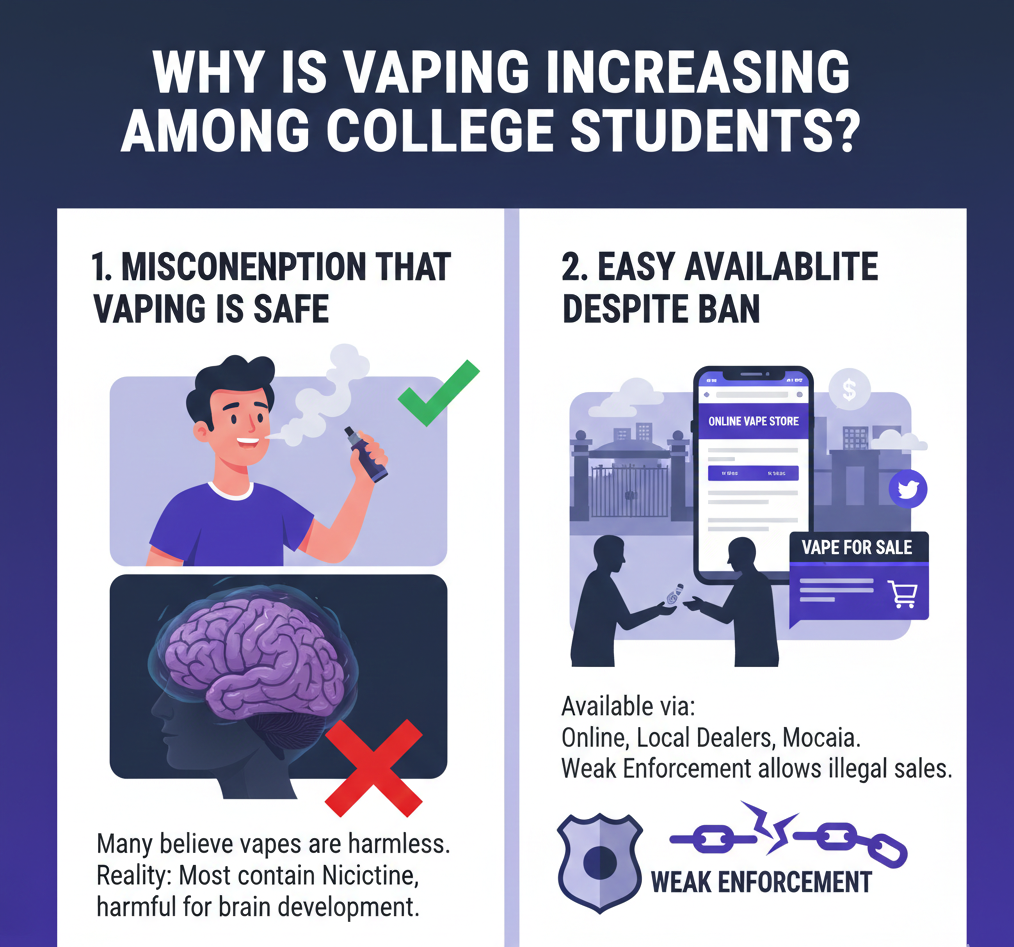
1. Misconception That Vaping Is Safe
Many students believe vaping is harmless or less dangerous than cigarettes. In reality, most vapes contain nicotine, which is highly addictive and harmful to brain development.
2. Easy Availability Despite the Ban
Vapes are easily available through:
- Online platforms
- Local dealers near colleges
- Social media sellers
Weak enforcement allows illegal sales to continue.
3. Peer Pressure and Trend Culture
Vaping is often seen as fashionable and modern, making students try it just to fit in with their peers.
Health Risks of Vaping Among Youth
Medical experts warn that vaping can cause:
- Nicotine addiction
- Lung and respiratory problems
- Anxiety and reduced concentration
- Long-term brain development issues
These risks are especially dangerous for teenagers and young adults.
Solutions: How Can Colleges Control Vaping?
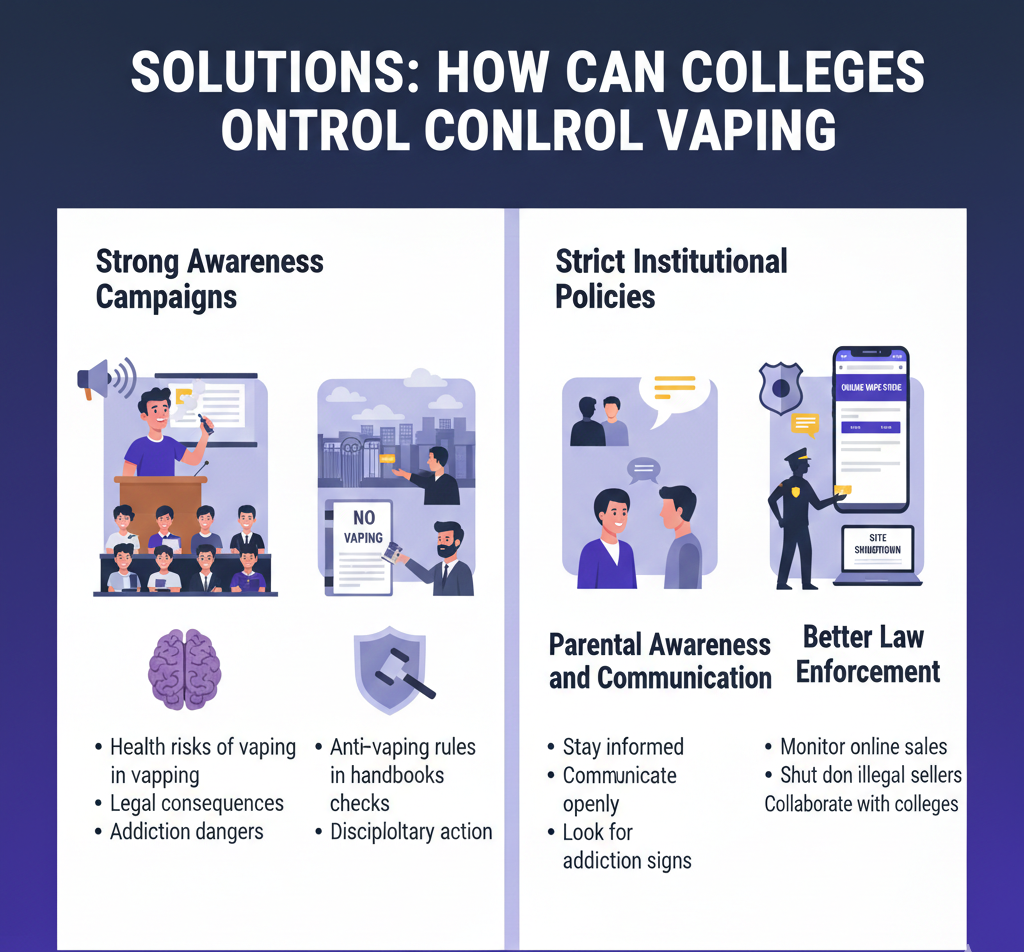
Strong Awareness Campaigns
Colleges should conduct seminars and workshops to educate students about:
- Health risks of vaping
- Legal consequences of using e-cigarettes
- Long-term addiction dangers
Strict Institutional Policies
Educational institutions must:
- Include anti-vaping rules in student handbooks
- Conduct regular random checks
- Take disciplinary action when required
Parental Awareness and Communication
Parents should:
- Stay informed about vaping trends
- Communicate openly with their children
- Look for early signs of addiction
Better Law Enforcement
Authorities need to:
- Monitor online vape sales
- Shut down illegal sellers near colleges
- Collaborate with educational institutions
Counseling and Mental Health Support
Instead of only punishment, colleges should provide:
- Addiction counseling
- Student support groups
- Mental health assistance
Conclusion
The rise of vaping in Pune colleges, despite a national ban, is a serious public health concern. Without immediate action, this issue could grow into a major youth addiction crisis. Awareness, strict enforcement, parental involvement, and student counseling are the key solutions to controlling vaping among students.